Address: No.14 Waihuan Road, CBD, Zhengzhou, China
Tel: +86-15978414719
Fax: +86-371-65621393
Mail: sale@alumhm.com
Time:2026-01-16
Across Google People also ask, Quora threads, and engineering forums, 7075 aluminium alloy comes up repeatedly because it sits in a rare spot: very high strength for an aluminum product (often compared to some steels by new buyers), while still being lightweight and available as sheet, coil, strip, and plate.
This article answers 5 of the most common questions buyers ask when sourcing 7075 aluminum sheet/coil/strip, with practical guidance you can use in RFQs and technical reviews.
Yes7075 is typically much stronger than 6061, especially in peak-aged tempers like T6/T651. Thats why 7075 is popular in aerospace structures, highly stressed fixtures, sporting goods parts, and applications where deflection matters.
But worth it depends on what youre optimizing:
Choose 7075 when strength-to-weight and stiffness are primary, and you can manage corrosion protection and weld limitations.
Choose 6061 when you want easier forming/welding, better general corrosion behavior, and lower cost.
A buying tip: if your drawings performance requirement can be met with 6061 (or 2024/7050 depending on the environment), switching away from 7075 may reduce total cost not only in material, but also in scrap rate, forming, and finishing.
| Factor | 7075 Aluminium Alloy | 6061 Aluminium Alloy | What it means for buyers |
|---|---|---|---|
| Strength potential | Very high | Medium | 7075 often allows thinner gauges or less reinforcement |
| Corrosion tendency | More sensitive (esp. SCC risk) | Generally better | 7075 may need cladding/coating/anodizing choices tightened |
| Formability | Moderate to limited (depends on temper) | Better | 7075 coil/strip may crack in tight bends in hard tempers |
| Weldability | Poor to limited | Good | 7075 is usually machined/fastened rather than welded |
| Typical use | High-stress parts | General purpose | Dont buy 7075 just because aerospace unless required |
If your project specifically calls for aerospace-type strength in sheet form, buyers often start with 7075 aircraft aluminum sheet as the reference product category and then refine temper, thickness, and surface requirements.
This is one of the most asked questions onlineand for good reason. Many new buyers discover 7075s high strength, then later see warnings about stress corrosion cracking (SCC) and get stuck choosing tempers.
Simple buying rule:
7075-T6 (or T651): higher strength, but more sensitive to SCC in certain environments/stress conditions.
7075-T73 (or T7351): slightly lower strength, but better resistance to SCC.
So, if your parts will see sustained tensile stress plus exposure to humid, salty, or corrosive environments (marine air, outdoor service, chemical contact), T73-type tempers are often chosen to reduce SCC risk.
| If your priority is | Consider | Why |
|---|---|---|
| Maximum strength, indoor/dry use, controlled loads | 7075-T6 / T651 | Peak-aged temper commonly specified for strength |
| Better SCC resistance for harsh environments | 7075-T73 / T7351 | Over-aged temper trades some strength for durability |
| Flatness and stress relief (machining stability) | -T651 / -T7351 variants | Stress-relieved stretching helps reduce distortion |
Buyer note: In coils/strips, the available tempers may depend on thickness, process route, and supplier capability. Always confirm temper + thickness + delivery condition together.
This is a hot question on Quora and Google because many people assume aluminum is aluminum. In practice, 7075 is generally not recommended for conventional fusion welding in critical applications.
Why buyers should care:
Welding can significantly reduce mechanical properties in the heat-affected zone.
It can increase cracking risk and lead to unpredictable strength.
Whats commonly done instead:
Machining from plate/sheet and using mechanical fastening (rivets, bolts)
Adhesive bonding (design-dependent)
If welding is unavoidable, engineers often redesign around a weld-friendly alloy (e.g., 6061) or use specialized proceduresbut that becomes a process qualification topic, not a simple material purchase.
If your assembly is weld-heavy, its worth evaluating alternatives early (sometimes 6061 or other alloys reduce downstream headaches even if the base material is weaker).
This is one of the most common buyer traps: purchasing 7075 in a hard temper for strength, then discovering its difficult to form.
7075 can be formed, but the temper matters a lot.
Hard tempers like T6 can crack during tight-radius bending, especially across the grain direction.
Softer or solution-treated conditions (depending on specification and supplier offering) are more form-friendly, then parts may be heat-treated after forming if the process allows.
RFQ tips for buyers of 7075 sheet/coil/strip:
State your bend radius requirement (inside radius) and direction relative to rolling direction.
Specify whether you need as-formed strength or you will heat-treat after forming.
Confirm surface requirements (some finishing processes interact with forming and fatigue performance).
When applications are aerospace-like but require better fatigue/corrosion balance than classic 7075-T6, buyers often compare options such as 7050 airplane grade aluminum plate for specific stress/corrosion regimes.
This question appears constantly in purchasing communities because 7075 is high value and commonly specified. The good news: you can reduce risk with a short checklist.
| Item to confirm | What to ask for | Why it matters |
|---|---|---|
| Grade & chemistry | Mill test certificate (MTC) heat/lot traceability | Confirms its truly 7075, not a substitute |
| Temper designation | T6/T651/T73/T7351, etc. | Temper drives strength, SCC resistance, and formability |
| Dimensional tolerances | Thickness, width, camber | Prevents downstream forming and assembly issues |
| Flatness/shape | Coil set, waviness limits, leveling method | Critical for stamping, laser cutting, and machining stability |
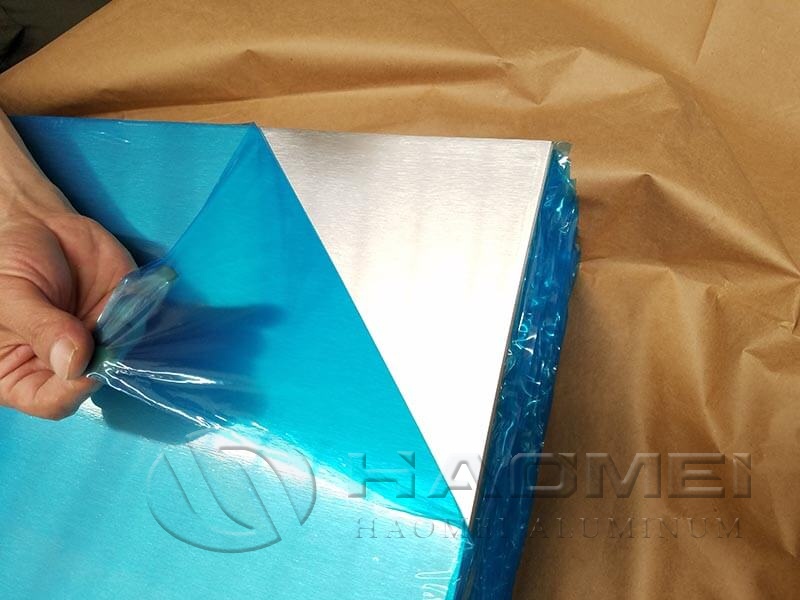
| Surface condition | Mill finish, anodize-ready, protective film | Impacts appearance, fatigue initiation, and yield |
| Inspection needs | Hardness, conductivity (if used), ultrasonic for plate | Helps catch mix-ups and internal issues |
A practical note for new buyers: aerospace grade is often used loosely online. For serious projects, align your purchase to a recognized standard and ensure documentation matches the requirementnot just the label.
Most sourcing problems with 7075 aluminium alloy come from missing one of these decisions:
Temper choice (T6 vs T73) based on strength vs corrosion/SCC risk
Manufacturing route (formed vs machined; welded vs fastened)
Flatness and tolerance needs for your process (stamping, CNC, laser)
Surface/finish requirements for corrosion protection and appearance
If you share these details in your RFQ, suppliers can quote accurately and youll avoid the most common it doesnt work in production surprises.