
Address: No.14 Waihuan Road, CBD, Zhengzhou, China
Tel: +86-15978414719
Fax: +86-371-65621393
Mail: sale@alumhm.com
Time:2026-01-09
After decades of technological iteration, aerospace aluminum alloys have formed a mature application pattern with the 2XXX and 7XXX series as the core and the 6XXX series as a supplement. These alloys, through precise element ratios and process control, are adapted to the performance requirements of different aerospace structures, becoming "regulars" in the aerospace industry.
2XXX series aluminum alloys use copper and magnesium as the main alloying elements. With their excellent comprehensive strength, damage tolerance, and machinability, they have become the basic materials for aerospace structures.
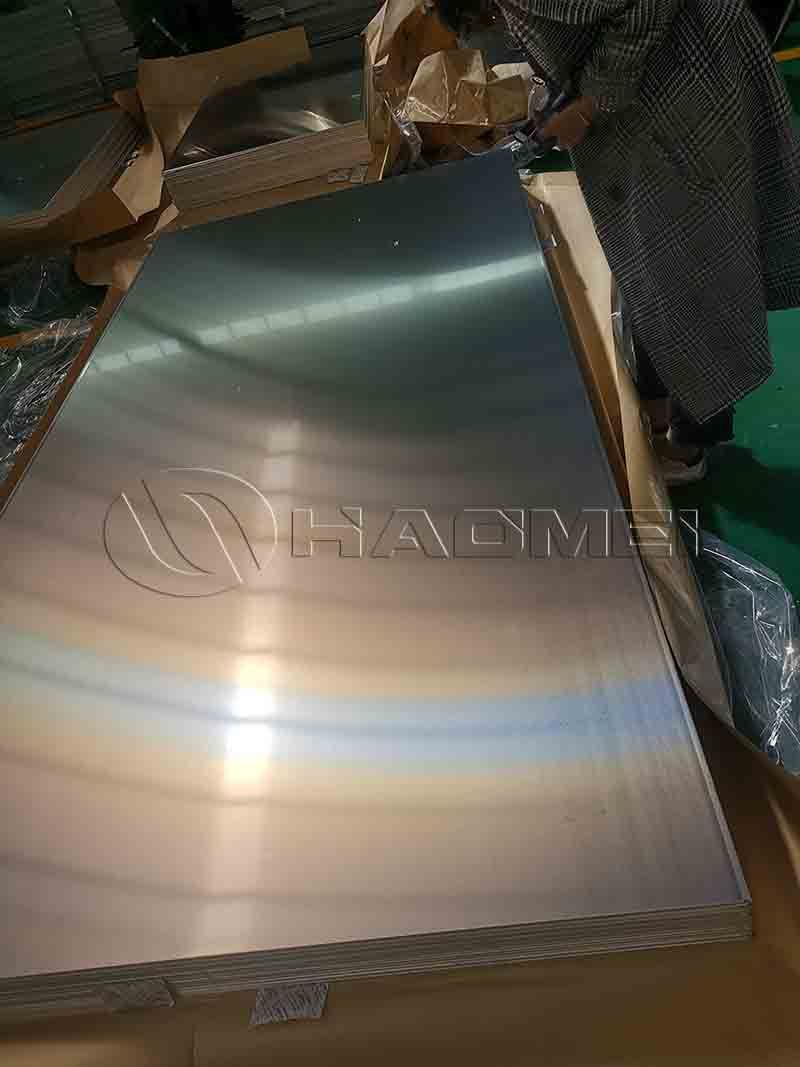
Among them, the most mature grades include 2024 and 2219. 2024 t3 aluminum balances toughness and formability and is widely used in critical parts such as fuselage skin stiffeners, wing stringers, and connectors.
2219 aluminum alloy, due to its excellent weldability, is particularly suitable for low-temperature environments and aerospace tank structures, holding an irreplaceable position in the aerospace field.
As one of the earliest aerospace aluminum alloy series to achieve large-scale application, the production process and application scenarios of the 2XXX series are very mature, making it a "perennial" in the aerospace industry.
The 7XXX series is currently the strongest aerospace aluminum alloy series. Zinc, magnesium, and copper are the main strengthening elements, achieving ultra-high strength through the formation of the MgZn₂ strengthening phase. It is the preferred material for the main load-bearing structures of aircraft. Among this series, grades such as 7075, 7050, and 7A09 are the most widely used.
7075 t651 has a tensile strength exceeding 560 MPa and is commonly used in core load-bearing components such as landing gear perimeter beams and seat rails.
7050 aluminum alloy, based on 7075, has an optimized composition, addressing its corrosion resistance shortcomings. It offers a better balance of strength, toughness, and corrosion resistance, and is widely used in key structures such as fuselage frames and wing spars. It is one of the most mature aluminum alloy grades used in aerospace applications both domestically and internationally.
7A09 aluminum alloy, as a classic ultra-dense aluminum, maintains high strength below 150℃ and exhibits excellent low-temperature performance, making it an ideal choice for structural components such as aircraft skin.
6XXX series aluminum alloys use magnesium and silicon as the main alloying elements. They have moderate strength but excellent corrosion resistance and extrusion formability, and are relatively inexpensive. They are mainly used in non-load-bearing structures within aircraft cabins.
Typical grades, such as 6061, are commonly used in cabin components, cable trays, interlayer frames, and equipment brackets. Due to their good processing stability and versatility, they have become an important supplement to the aerospace aluminum alloy system.
The aerospace flight environment is complex and variable, demanding extremely high material reliability. Therefore, aerospace aluminum alloys must be subject to strict standard control, with clear "red lines" for each indicator, from chemical composition and mechanical properties to dimensional accuracy and surface quality.
Precise control of chemical composition is fundamental to ensuring the performance of aerospace aluminum alloys. Standards require that the content deviation of key elements must not exceed 0.05%. Exceeding this range may lead to decreased material strength and reduced corrosion resistance, directly threatening aviation safety.
Aerospace aluminum alloys must possess sufficient strength, toughness, and fatigue life to withstand various loads during flight. The mechanical performance thresholds for different grades and heat treatment states are clearly defined by the corresponding standards. These indicators directly determine the material's load-bearing capacity and are the core basis for aerospace component design and material selection.
Aerospace component assembly requires extremely high precision; therefore, dimensional and shape tolerance control of aluminum alloy materials is crucial. These stringent dimensional requirements are the foundation for ensuring assembly efficiency and connection strength of aerospace components.
Surface and internal defects in aerospace aluminum alloys can become stress concentration sources, accelerating corrosion and fatigue failure. Therefore, the standard imposes a "zero critical defect" requirement for quality control.
Regarding surface quality, GB/T 42793-2024 prohibits defects such as cracks, peeling, and corrosion; scratch depth ≤0.03mm; and oxide color must be uniform and removable. For plates requiring surface treatment, coating adhesion must pass a cross-cut test, oxide film thickness ≥5μm, and salt spray corrosion resistance ≥48 hours.
Regarding internal quality, the standard requires that defects be detected by ultrasonic testing, and that pores or inclusions with a diameter greater than 2mm are not allowed. For products such as 7050 aluminum alloy profiles, the internal defect classification needs to be further refined, and precise control can be achieved through non-destructive testing.


